Notice the Details
Look beyond the main sights to the colours, textures, shopfronts, courtyards, cafés and everyday scenes that give Hoi An its visual character.
A guide to experiencing Hoi An through its culture, coffee, craft, food, style and photogenic streets.
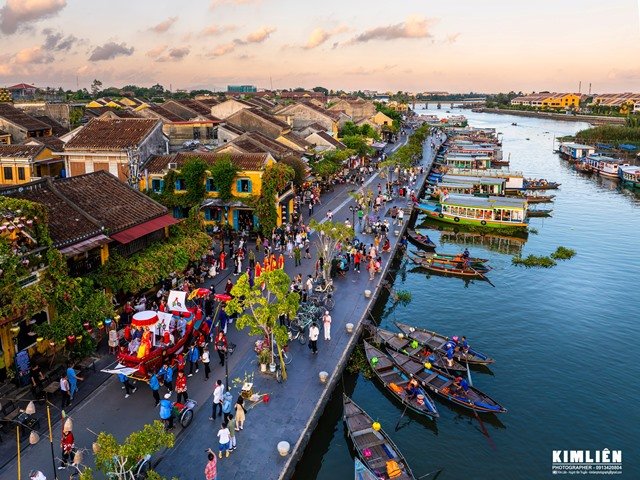
Our Hoi An travel guide is created to help you discover the city beyond a simple list of places to visit — through its coffee, craft, food, Vietnamese-inspired style, photography and the everyday details that make time in Hoi An memorable.
Hoi An is often first remembered for yellow façades, lantern-lit streets and the atmosphere of its historic centre. But the character of the city also reveals itself through smaller moments: a cup of coffee, food shared around a table, something made by hand, what people wear and the changing rhythm of the streets throughout the day.
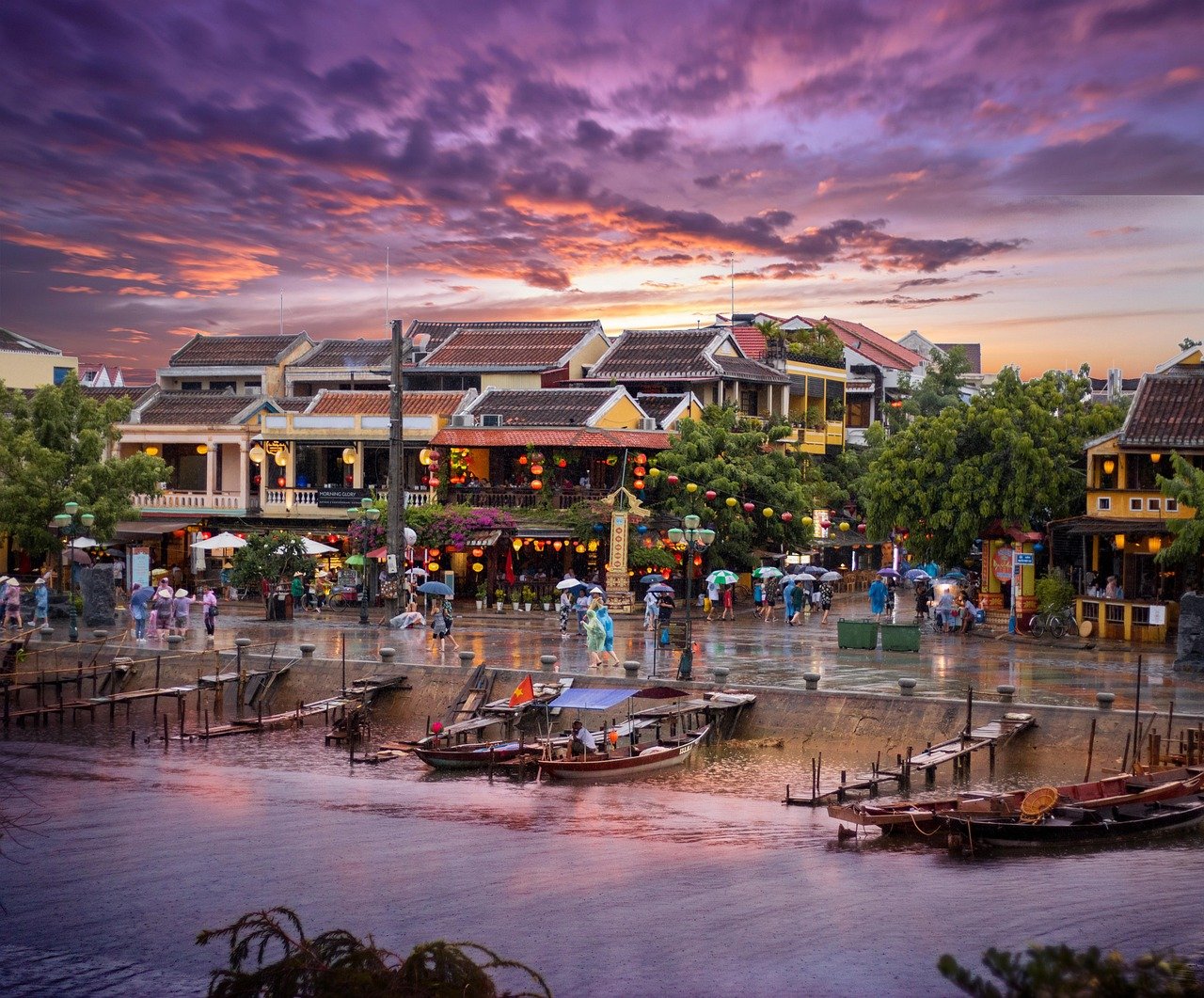
Hoi An developed as a trading port where different communities, goods and traditions met over centuries. That history remains visible in the streetscape, architecture and cultural character of the historic town.
Today, the experience of Hoi An extends beyond its preserved buildings. Coffee, food, craft, clothing and photography can all become ways for visitors to engage more closely with the place rather than simply pass through it.
The city also changes noticeably with time of day. Mornings can feel quieter and more spacious, while later hours bring greater movement, warmer light and the glow of lanterns after dark.
Hoi An rewards curiosity — especially when there is enough time to notice the details.
Look beyond the main sights to the colours, textures, shopfronts, courtyards, cafés and everyday scenes that give Hoi An its visual character.
Making, tasting and trying something yourself can create a different connection with a place than observation alone.
Hoi An feels different across the day. Leaving room in your itinerary makes it easier to experience those changes rather than rushing from one landmark to another.
Coffee in Vietnam is more than a quick drink. From the slow drip of a traditional phin to combinations with condensed milk, coconut or egg, the way coffee is prepared and enjoyed can become part of the experience itself.

One of the most recognizable ways to prepare Vietnamese coffee is with a phin — a small metal filter placed directly over the cup. Hot water passes through the coffee gradually, creating a brewing process that naturally invites a slower pace.
Condensed milk is a familiar companion to Vietnamese coffee, but it is only one of many ways the drink can be served. Different preparations introduce changes in texture, sweetness and aroma.
In Hoi An, sitting down for coffee can also be a useful pause between exploring the streets, food, craft and other parts of the town.
Coffee brewed slowly through a small metal filter, creating one of the most recognizable Vietnamese coffee rituals.
Strong coffee combined with sweet condensed milk for a rich balance of bitterness and sweetness.
Coffee paired with a creamy coconut mixture, creating a cooler and more dessert-like interpretation.
Coffee topped with a smooth, sweet egg-based mixture that creates a distinctive creamy texture.
Lanterns are woven into the visual experience of Hoi An. Seen hanging above streets, outside shops and glowing after sunset, their colour and light have become closely associated with the atmosphere visitors remember from the town.
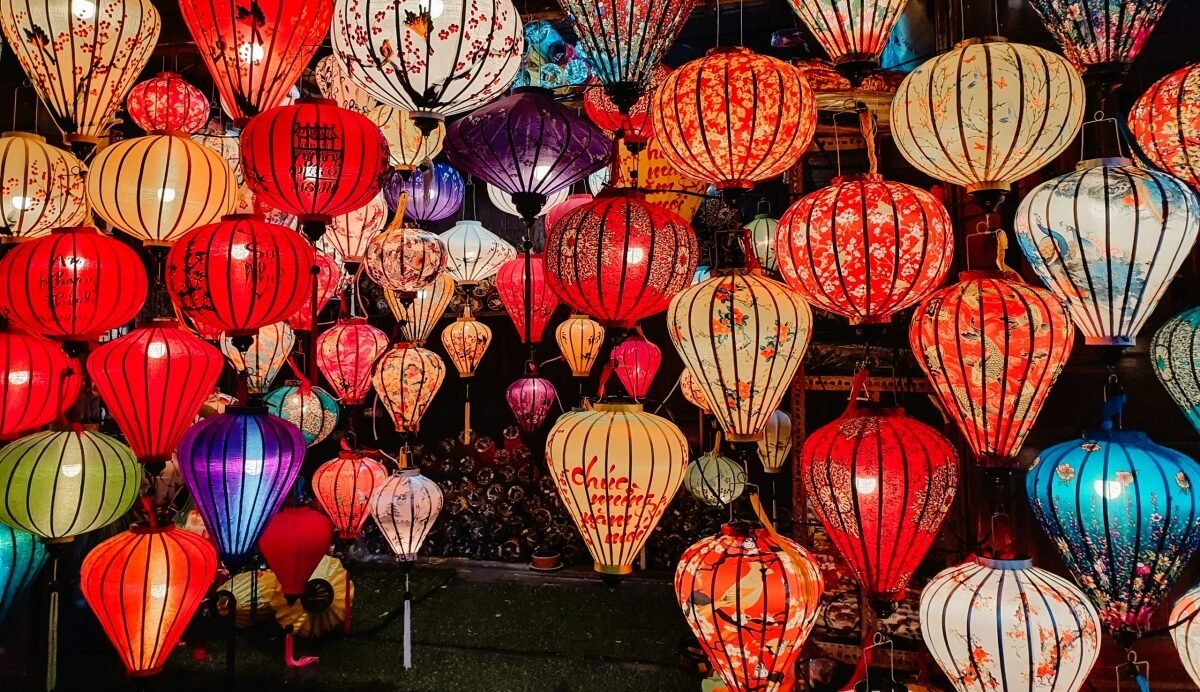
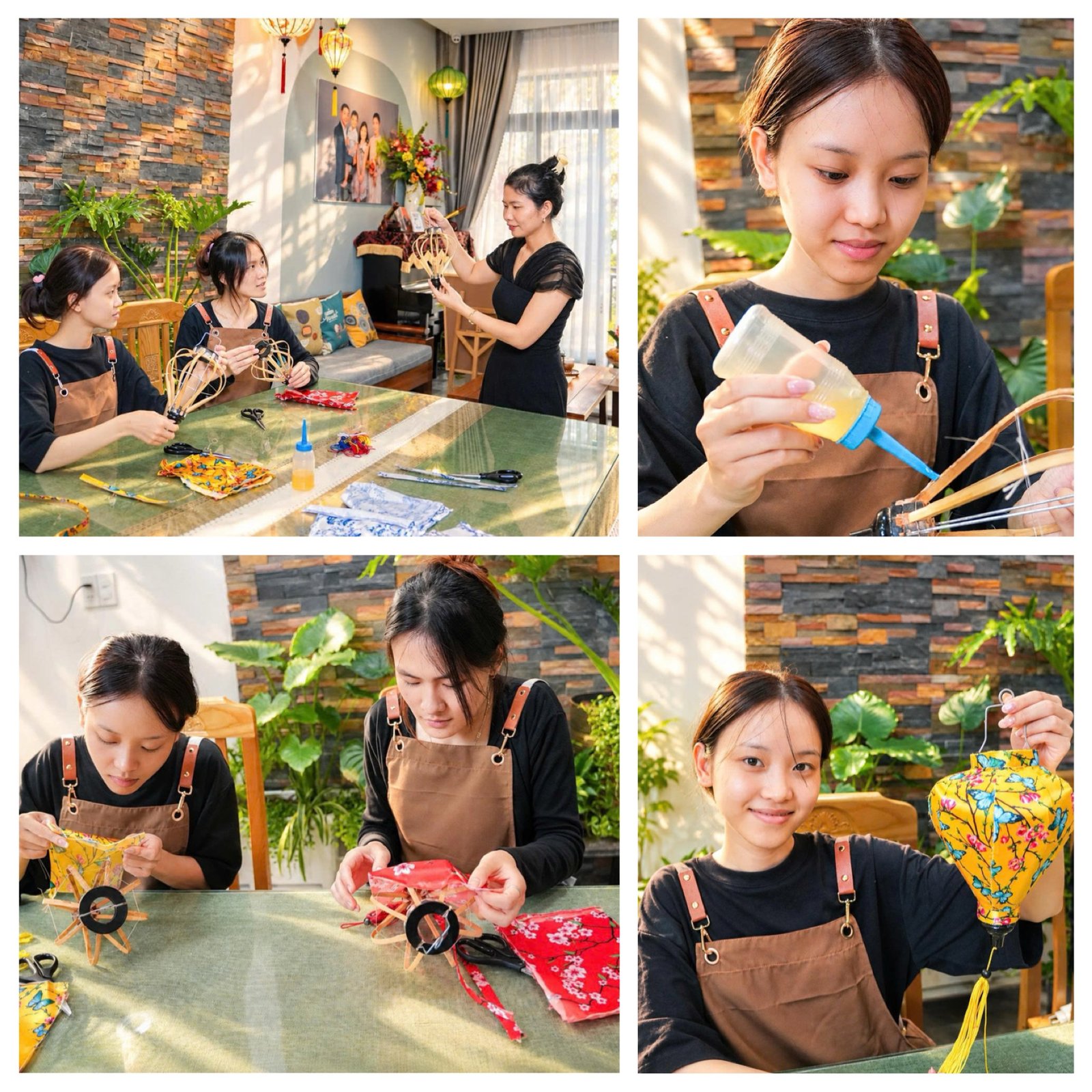
Seeing lanterns throughout Hoi An is one experience. Spending time working with the shape, frame and fabric offers another way to engage with this familiar part of the town's visual identity.
For many visitors, lanterns are among the most immediately recognizable details of Hoi An. During the day they add colour above streets and façades; after sunset, their warm light changes the atmosphere of the town again.
Their appeal is not only visual. A lantern is also something that can be approached through making: understanding its form, handling the materials and seeing how separate elements gradually become a finished object.
That shift from looking to participating is one reason lantern making can fit naturally into a slower visit to Hoi An. Instead of simply taking a photograph of something associated with the town, you spend time creating something yourself.
A handmade object can become a different kind of travel memory — one shaped by the time spent making it.
The lantern starts with its structure, giving shape to the object before the decorative surface is added.
Colour and fabric influence the personality of the finished lantern and make room for individual preference.
The experience becomes tactile as the material is positioned and shaped around the lantern structure.
The finished piece becomes a physical reminder of time spent making rather than simply observing.
Food is one of the easiest ways to experience another side of Hoi An. From bowls of noodles and small local dishes to a Banh Mi eaten between walks through town, the flavours of a visit often become part of the memories that remain long after the journey.
Exploring Hoi An does not have to mean moving continuously from one attraction to another. Stopping for food creates its own rhythm — a chance to sit down, look around and experience the town from a different perspective.
Some dishes are closely associated with Hoi An and the surrounding region, while others are familiar across Vietnam but take on their own character depending on where and how they are prepared.
For visitors, that variety makes food an approachable way to explore: try something specific to the area, return to a Vietnamese favourite, or simply follow what looks interesting along the way.
A good day in Hoi An can be remembered as much by what you tasted as by what you saw.
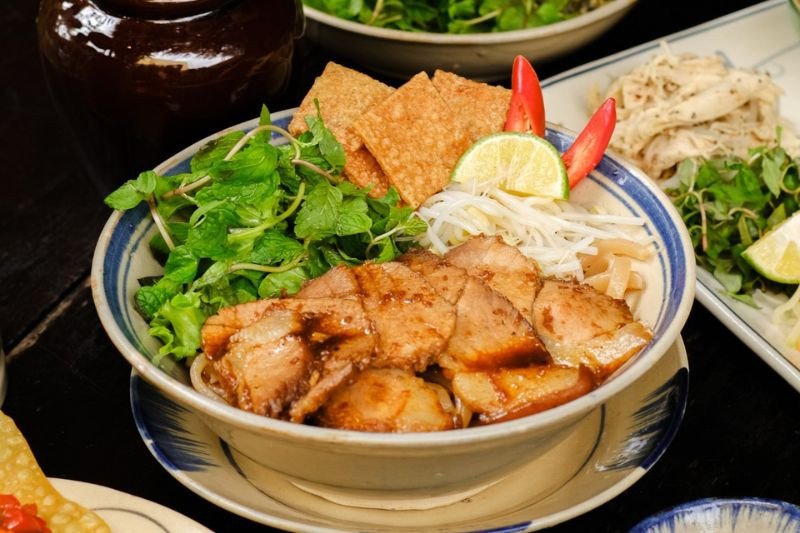
A noodle dish strongly associated with Hoi An, typically bringing together thick noodles, greens, slices of pork and contrasting textures.
A central Vietnamese noodle dish served with a relatively small amount of flavourful broth, herbs and a variety of possible toppings.
Delicate steamed dumplings commonly associated with Hoi An, recognizable for their pale, flower-like appearance.
Crisp bread filled with layers of savoury, fresh and aromatic ingredients — convenient for anything from breakfast to a quick pause during a day of exploring.
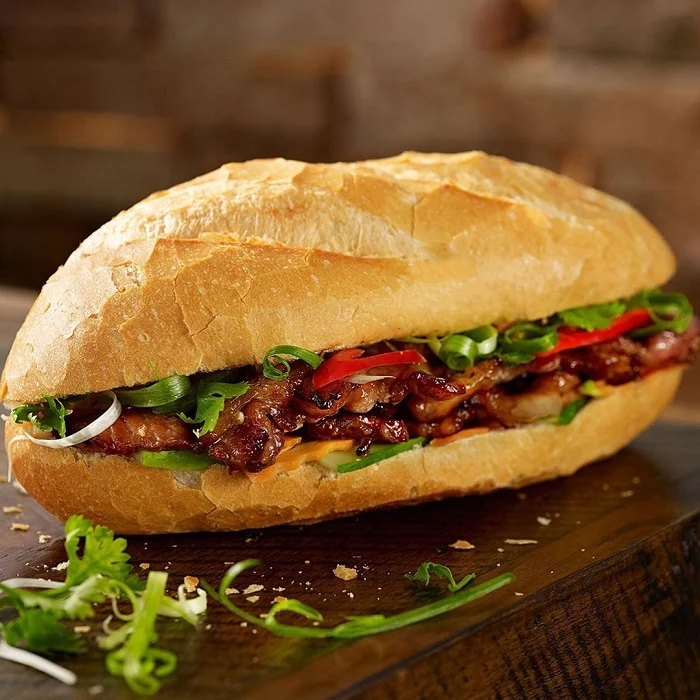
Part of the appeal of Banh Mi comes from contrast: a crisp exterior, softer bread inside and layers of fillings, herbs, vegetables and sauces. It can be enjoyed quickly, but that does not make it a forgettable part of the food experience.
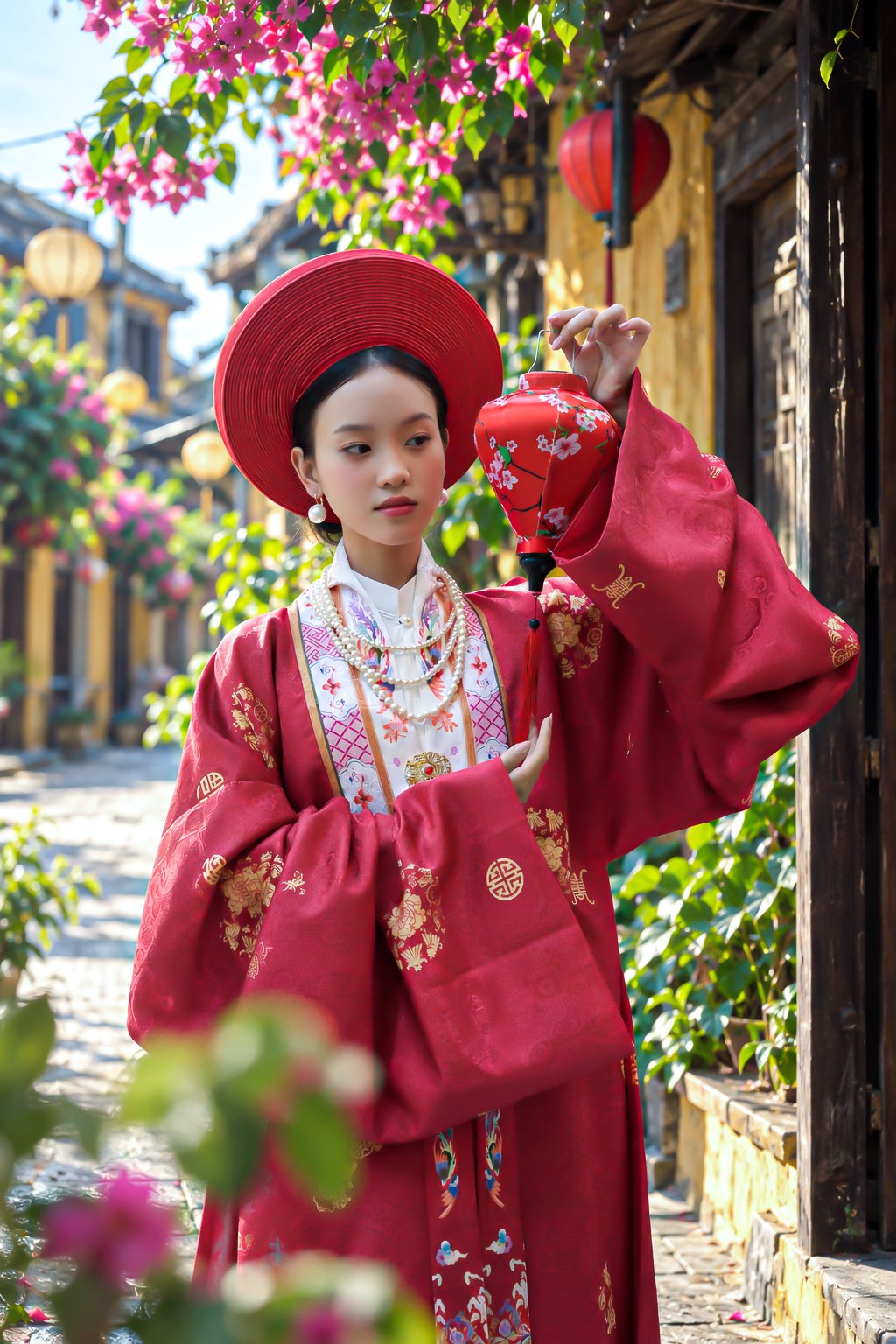
Graceful in movement and instantly recognizable in silhouette, the Ao Dai is closely associated with Vietnamese dress and visual culture. In Hoi An, its flowing lines can feel especially striking against yellow façades, wooden doors, lanterns and the quieter corners of the old town.
 Choose Your Look
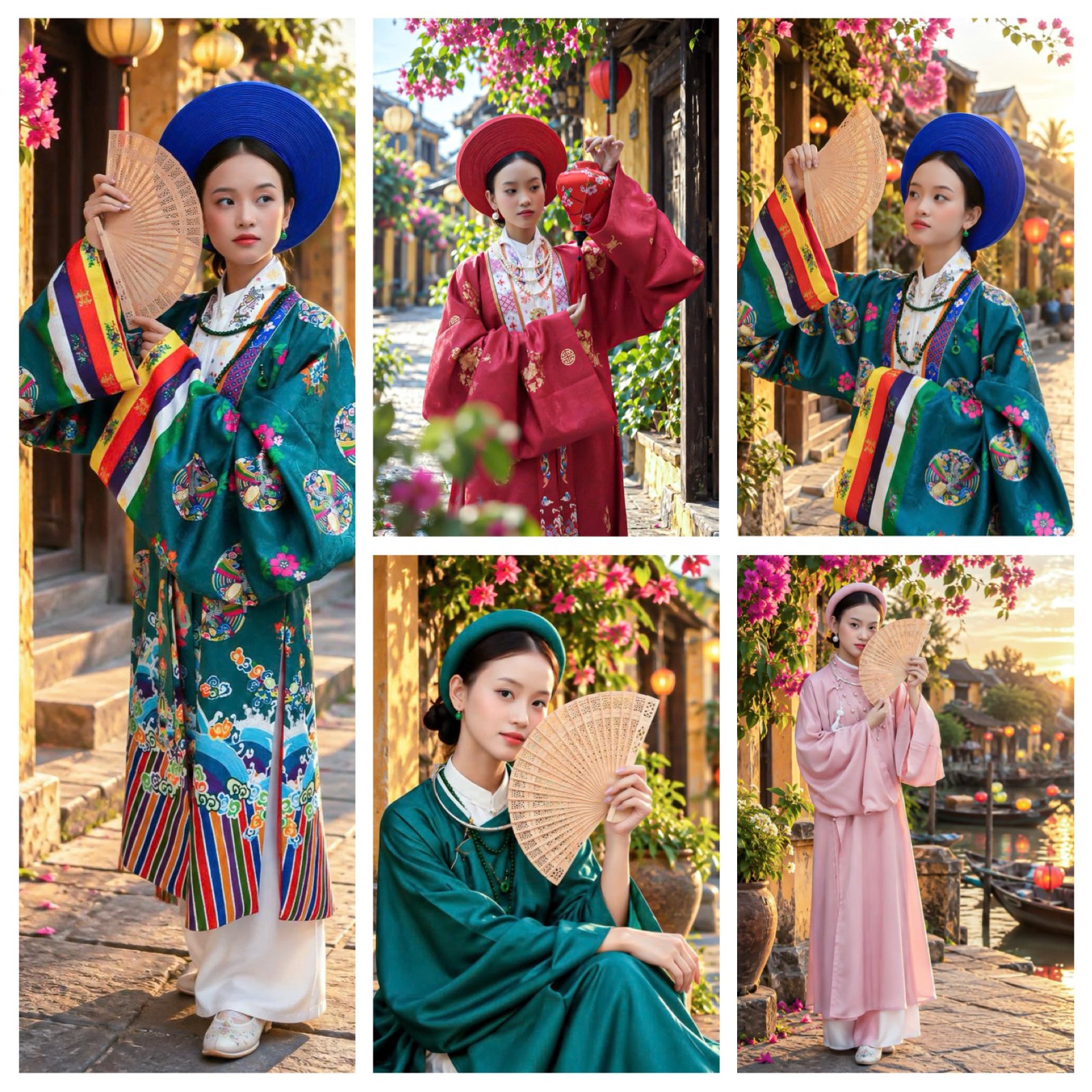 Style in Motion
The Ao Dai is a recognizable form of Vietnamese dress, typically defined by a long fitted tunic worn over trousers. Its long panels create a distinctive silhouette that changes subtly with movement.
Ao Dai can be seen in different settings in Vietnam, including celebrations, ceremonies, special occasions and photography. Designs vary widely in colour, fabric, pattern and styling, ranging from understated to highly decorative.
For visitors choosing to wear one in Hoi An, the experience can also become a way to pay more attention to colour, movement and surroundings. Rather than treating the clothing as a costume, it is worth approaching the experience with curiosity and respect for its Vietnamese context.
The most memorable photographs often come from the relationship between the person, what they are wearing and the place around them.
Consider how the Ao Dai colour will interact with Hoi An's yellow walls, wooden façades, greenery and colourful lanterns.
The long panels become especially expressive while walking or turning, giving photographs a sense of movement rather than relying only on static poses.
Streets, doorways, lanterns and quieter architectural details can each create a different visual relationship with the clothing.
Hoi An offers more than a single iconic backdrop. Yellow façades, weathered doors, narrow streets, lanterns and changing natural light create layers of colour and texture that can make even a short walk feel like a sequence of different scenes.
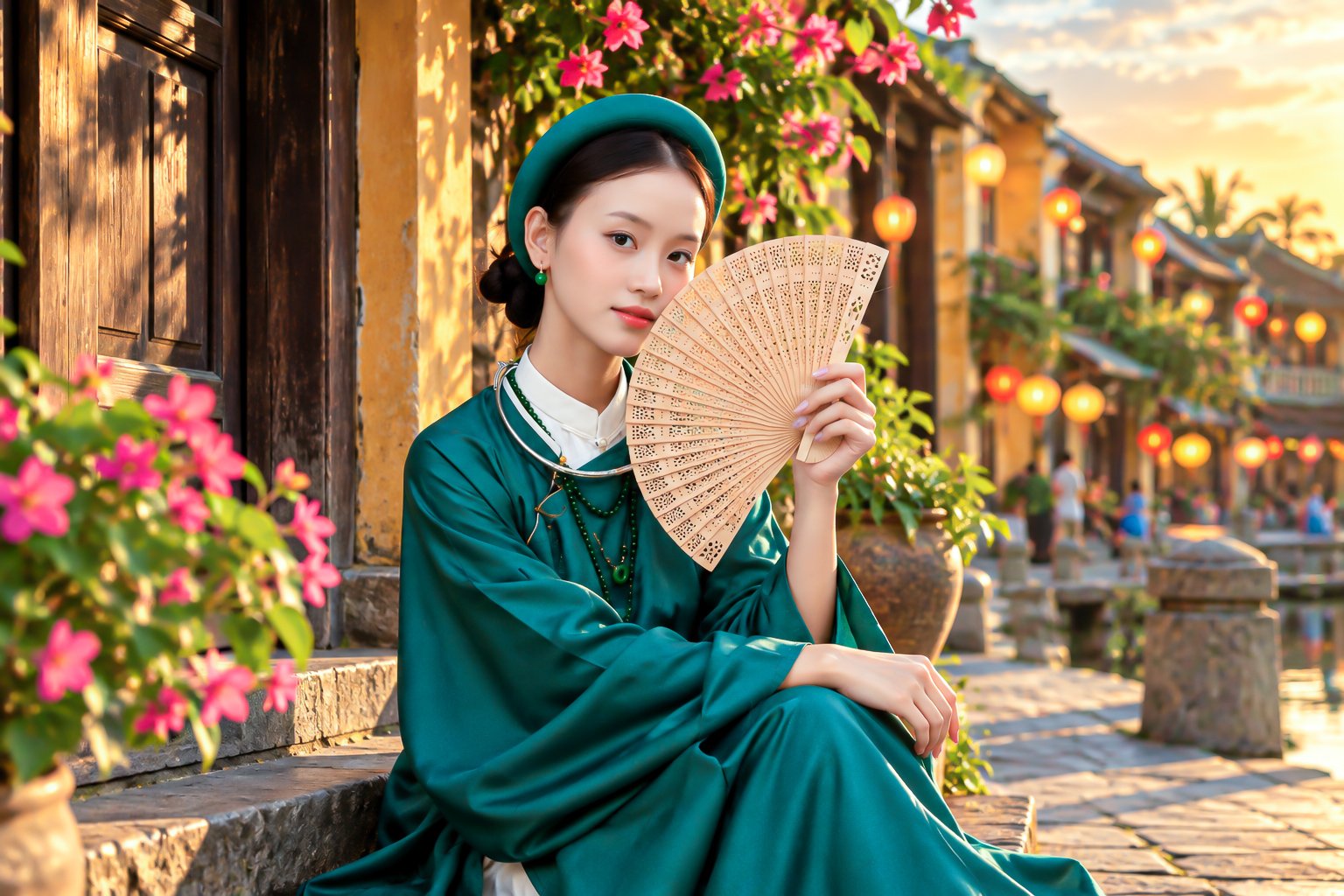
Hoi An's historic streets provide many visual elements within a relatively compact area. A doorway, a textured wall, a quiet lane or a row of lanterns can sometimes create a stronger photograph than a crowded landmark.
Light changes those settings throughout the day. Softer natural light can bring attention to faces and architectural details, while later hours introduce warmer tones and illuminated lanterns.
Clothing also changes the relationship between subject and setting. Neutral styling can keep attention on the person, while an Ao Dai can introduce colour, shape and movement that interact naturally with the streets around it.
A strong travel portrait should remember the person and the place at the same time.
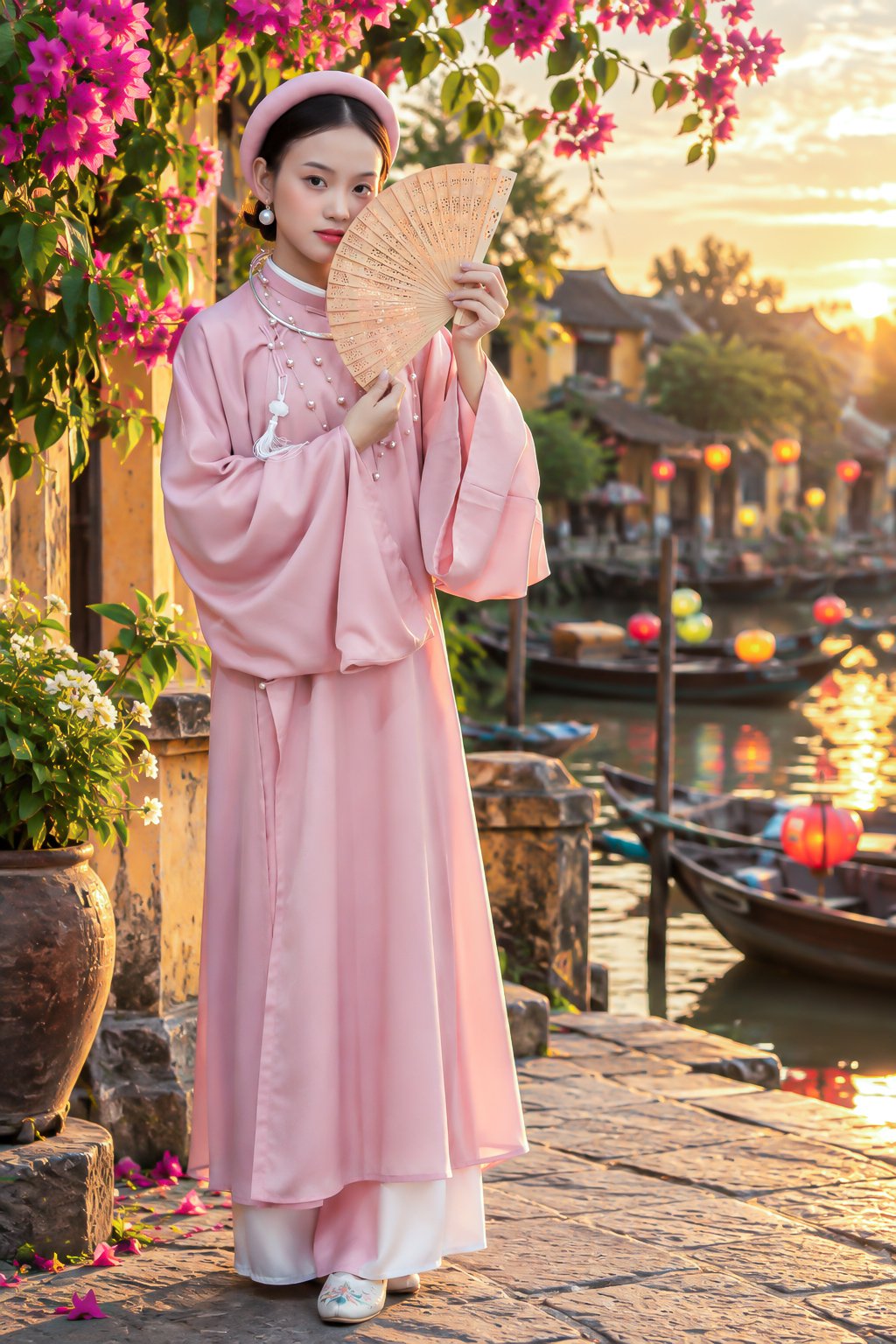
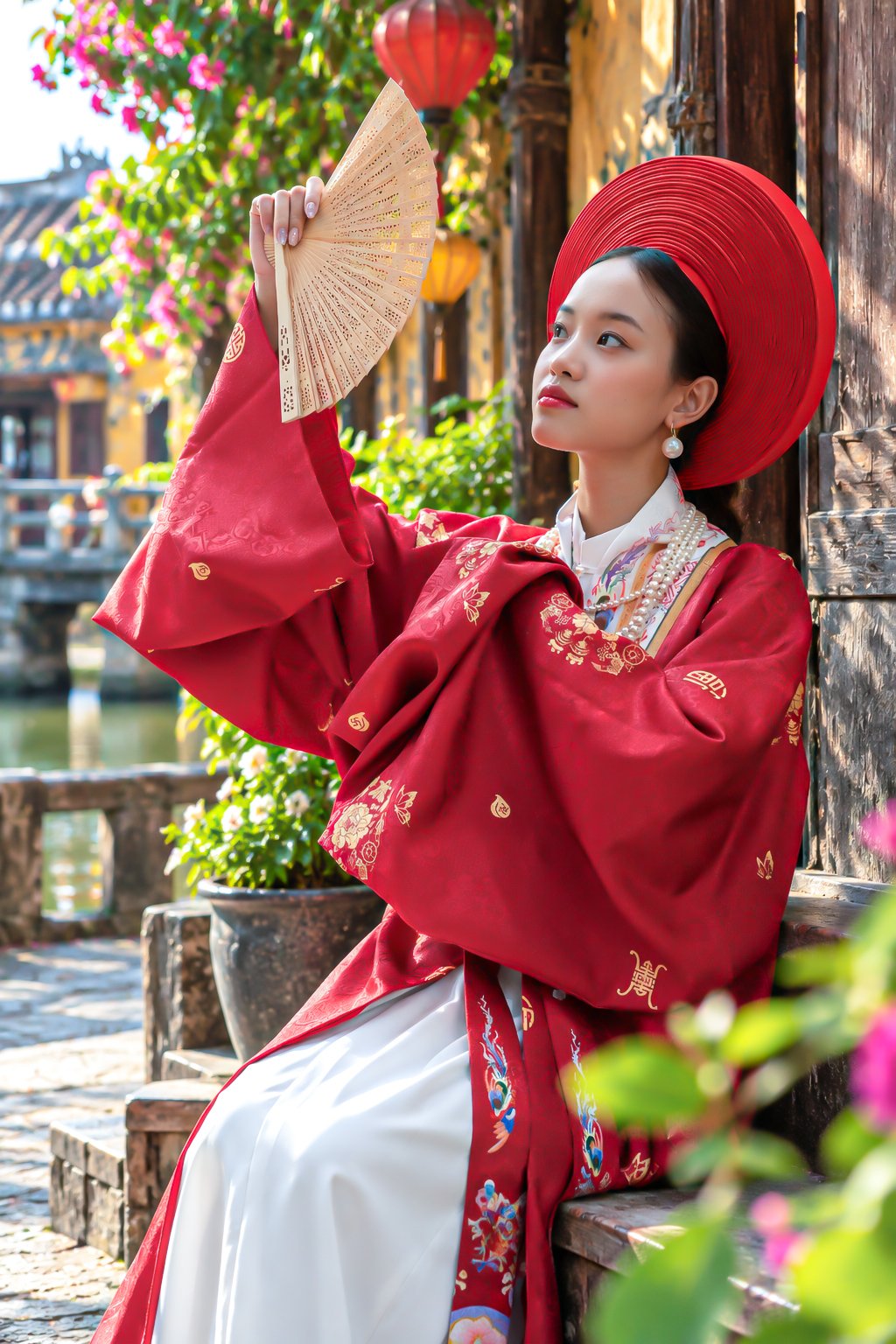

Light, temperature, street activity and the overall atmosphere can change considerably between morning, afternoon and evening.
Think about how clothing colours and shapes will interact with yellow walls, dark wood, greenery and lanterns.
Walking, turning and interacting naturally with the surroundings can create photographs that feel less static.
A simple doorway or quiet wall can sometimes provide better separation and composition than the busiest attraction.