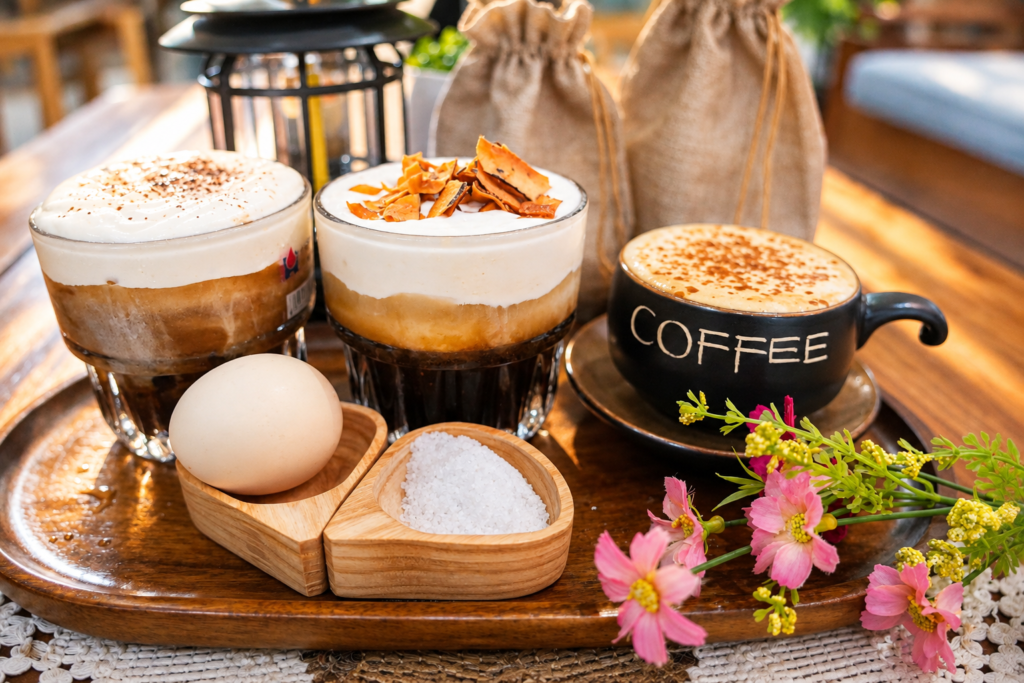
Egg Coffee vs Coconut Coffee: Which Should You Try?
One is built around a light, whipped egg cream; the other brings coconut into a chilled, often blended coffee. Both can be rich and sweet, but they offer very different textures and ways of tasting coffee.
If you have time for only one Vietnamese specialty coffee, the most useful question is not which drink is more famous. It is whether you want a warm, layered dessert-like coffee or a refreshing coconut-based drink with a stronger sense of cold creaminess.

Two Creamy Coffees, Two Different Ideas
Vietnamese coffee is often associated with concentrated brews, condensed milk and the traditional phin filter. Egg coffee and coconut coffee build on that coffee culture in different ways.
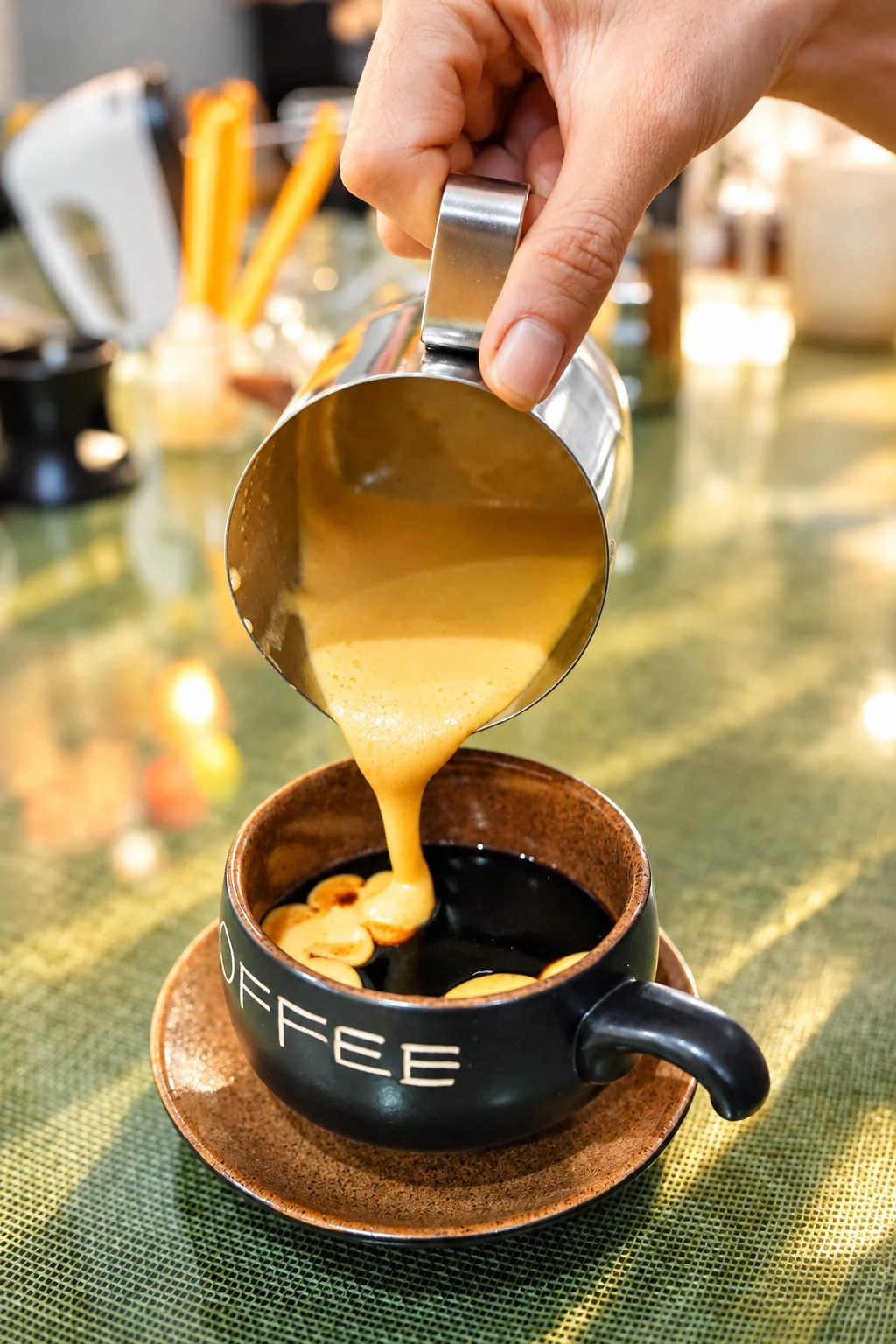
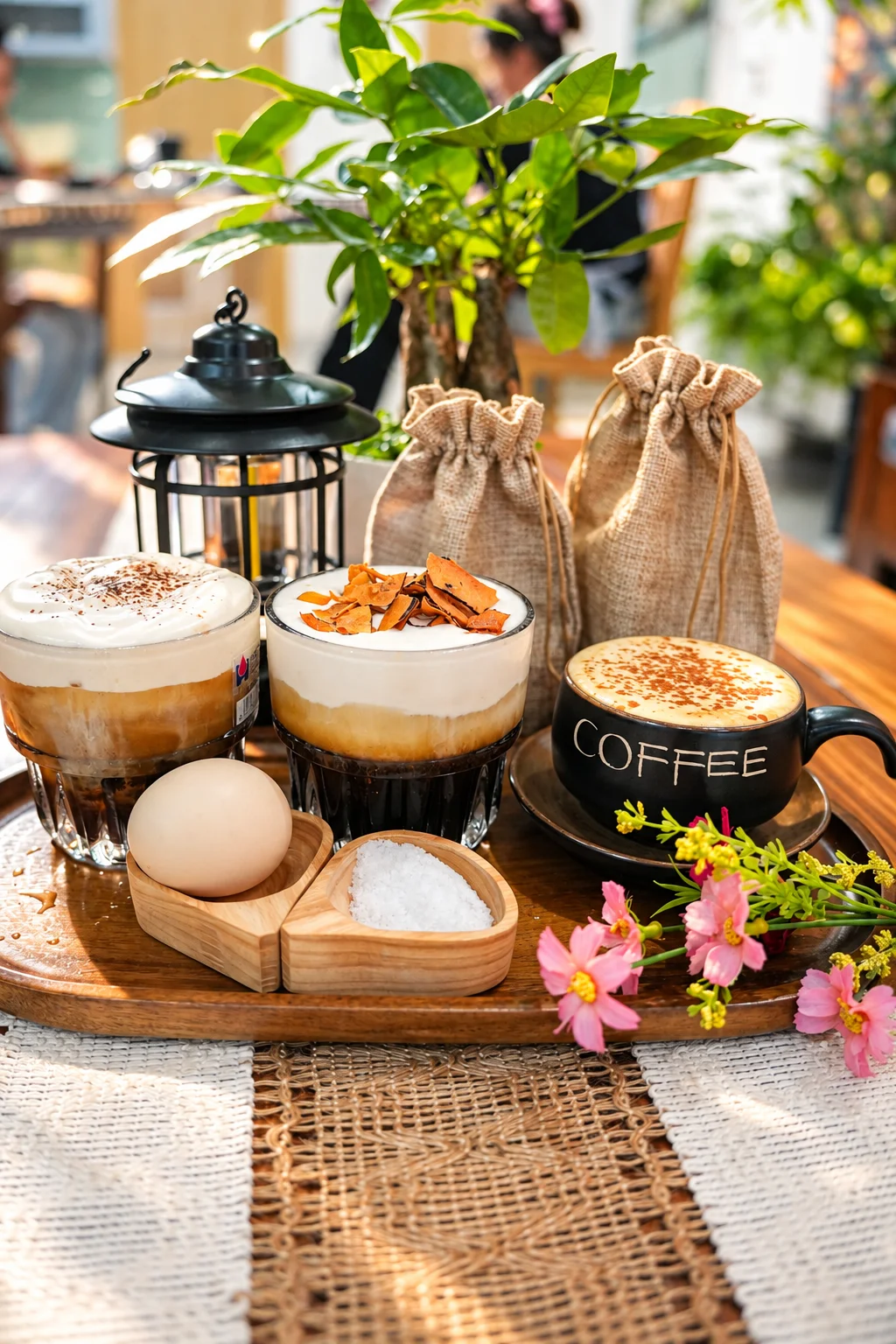
Egg coffee, known as cà phê trứng, is strongly associated with Hanoi. It typically combines concentrated coffee with a whipped mixture of egg yolk and sugar, often enriched with sweetened condensed milk. The topping is light but rich, creating a pronounced contrast between coffee bitterness and creamy sweetness.
Coconut coffee, often called cà phê cốt dừa, combines coffee with coconut-based ingredients. A popular version uses a chilled or blended coconut mixture, producing a smooth, icy texture. Recipes vary considerably: some are thick and dessert-like, while others are more drinkable and coffee-forward.


Egg Coffee vs Coconut Coffee at a Glance
The following comparison describes common café-style preparations, not a fixed national recipe. Individual cafés may change sweetness, serving temperature, proportions and ingredients.
| Feature | Egg coffee | Coconut coffee |
|---|---|---|
| Signature ingredient | Whipped egg yolk mixture | Coconut milk, cream or another coconut-based mixture |
| Typical temperature | Often warm; cold versions also exist | Frequently iced or blended |
| Texture | Foamy, airy, custard-like topping | Cold, smooth, creamy or slushy |
| Main flavour impression | Rich sweetness contrasted with coffee bitterness | Coconut sweetness and coffee roast notes |
| How to drink | Taste the cream and coffee separately or together | Sip or stir as the chilled mixture softens |
| Dietary consideration | Contains egg; commonly contains dairy | May contain dairy despite the coconut base |
| Best suited to | Those who enjoy warm, rich dessert-like drinks | Those who enjoy chilled coconut drinks |
What Do They Actually Taste Like?
Egg coffee: a creamy topping followed by concentrated coffee
The first impression of egg coffee is often its foam. A well-prepared topping should feel light and smooth rather than heavy or grainy. Depending on the recipe, its sweetness can suggest custard or a whipped dessert cream.
Beneath the topping, concentrated coffee introduces a darker, roasted flavour. That contrast matters. Without enough coffee character, egg coffee can become simply a sweet cream dessert. Without a balanced topping, the coffee may dominate.
Some people prefer taking a small spoonful of foam before sipping the coffee. Others gently combine the layers. Neither approach is compulsory, and they create different tasting experiences.

Coconut coffee: chilled creaminess with a tropical flavour
Coconut coffee feels different from the first sip. Instead of an airy topping sitting over warm coffee, many versions use a cold coconut mixture that blends gradually with the coffee.
Coconut contributes its own flavour, so the result is not simply iced coffee with extra sweetness. Depending on the coconut product, the drink may taste milky, gently nutty or distinctly coconut-forward.
Texture can change quickly as the ice melts. A thick blended coconut coffee may begin almost like a soft frozen dessert, then become easier to drink. A version made with coconut milk and ice cubes will generally feel lighter.
Which Coffee Should You Order First?
If you love tiramisu, custard or creamy desserts
Start with egg coffee. Its whipped topping offers a dessert-like quality, while the concentrated coffee helps balance the richness. It is especially appealing when you want to savour a drink slowly rather than finish it quickly.
If you prefer iced drinks in warm weather
Coconut coffee is likely to be the more comfortable choice. The cold temperature and coconut flavour make it particularly attractive during a warm afternoon. Remember that a heavily sweetened blended version can still feel quite rich.
If you normally drink strong black coffee
Neither is a direct substitute for black coffee. Egg coffee may offer a clearer contrast between strong coffee and cream when the layers remain separate. Coconut coffee may taste less coffee-forward if the coconut mixture is especially thick or sweet. Ask about the coffee-to-cream balance before ordering.
If you are trying Vietnamese specialty coffee for the first time
Choose according to texture. Egg coffee is the more unusual introduction if you have never tried whipped egg cream in coffee. Coconut coffee may feel more familiar if you already enjoy coconut smoothies or iced blended drinks.
If you avoid eggs or dairy
Egg coffee is unsuitable for people with an egg allergy. Coconut coffee does not necessarily contain egg, but it may include condensed milk or other dairy ingredients. Always confirm the actual recipe with the café, particularly if you have an allergy.
Why Preparation Changes the Result
The difference between these drinks is not only a list of ingredients. Their preparation methods determine how sweetness, temperature and coffee flavour reach your palate.
What matters when preparing egg coffee
The egg mixture needs sufficient whipping to become smooth and aerated. Under-whipping may leave it dense or uneven. Excessive sweetness can mask the coffee, while an insufficiently stable topping may lose its texture quickly.
Warm coffee also affects the experience. The temperature contrast between the coffee and topping can be part of the appeal, although cafés use different methods to maintain serving temperature.
Because some recipes use raw or lightly heated egg yolk, food safety deserves attention. Raw eggs can carry Salmonella. People at increased risk from foodborne illness, including pregnant people, young children, older adults and immunocompromised individuals, should avoid preparations containing raw or undercooked eggs. Pasteurized egg products are a safer option when a recipe requires uncooked egg.
What matters when preparing coconut coffee
Coconut coffee depends on the balance between coconut richness, ice, sweetness and coffee strength. Too much ice can dilute the drink as it melts. Too much coconut mixture can obscure the coffee. Too little liquid can make a blended version difficult to achieve smoothly.
Coconut milk and coconut cream are not interchangeable in every recipe. Their different fat and water contents influence how thick the finished drink feels.
A stronger coffee base can help retain coffee flavour against a rich coconut mixture, but increasing strength does not automatically produce better balance. The right proportion depends on the sweetness and concentration of the other ingredients.


How to Compare Both Drinks Fairly
If you have the opportunity to taste both, a simple side-by-side comparison reveals more than ordering them on different days from unrelated cafés.
- Start with the coffee aroma. Notice how much roasted coffee character remains detectable before mixing.
- Take a small first taste. For egg coffee, try a little topping and then a combined sip. For coconut coffee, notice the initial coconut-to-coffee balance.
- Compare texture rather than sweetness alone. Egg foam should feel different from the denser, colder body of blended coconut coffee.
- Observe how each changes. Warm egg coffee may cool, while icy coconut coffee gradually melts and becomes less concentrated.
- Decide which you would finish. The drink that seems most interesting at the first sip is not always the one you most enjoy over a full serving.
For a useful comparison, try to keep the coffee base reasonably similar if preparing the drinks yourself. Otherwise, differences in bean selection, roast or brewing strength can overshadow the ingredients you are trying to compare.

What If Neither Drink Sounds Right?
Vietnamese coffee offers other ways to explore the relationship between strong coffee, sweetness and texture.
Vietnamese iced milk coffee
Cà phê sữa đá is a useful starting point if you want a more direct coffee flavour without an egg or coconut topping. Sweetened condensed milk brings richness, while ice changes the temperature without introducing a separate whipped layer.
Vietnamese salt coffee
Cà phê muối offers another approach to creamy coffee. Salt can change the perception of sweetness and bitterness, although recipes vary. It is worth considering if you enjoy contrasting flavours but do not want egg or coconut.


A Few Misconceptions Worth Clearing Up
Egg coffee should not taste strongly of raw egg
The intended flavour is generally a combination of sweet cream and coffee. A pronounced raw-egg smell, poor texture or uncertain food handling should not be dismissed as an unavoidable characteristic of the drink.
Coconut coffee is not automatically dairy-free
Coconut ingredients do not guarantee a vegan or dairy-free drink. Condensed milk is common in many Vietnamese coffee preparations, so the ingredients should be checked rather than assumed.
Neither drink has one universal sweetness level
Sweetness depends on the café and recipe. Some establishments may be able to reduce added sweetener, but pre-prepared mixtures can limit how much a drink can be adjusted.
Both drinks still contain caffeine
Adding egg cream or coconut does not remove caffeine from the coffee. The actual amount depends on the coffee used, the serving size and the brewing method, rather than the drink's name alone.
Questions to Ask Before Ordering
Can I order egg coffee cold?
Some cafés offer cold egg coffee, although warm versions are particularly well known. Check the menu rather than assuming both temperatures are available.
Does coconut coffee always contain coconut milk?
Not necessarily. Recipes may use coconut cream, coconut milk or prepared coconut mixtures. The ingredient and proportion can noticeably affect texture and sweetness.
Which one is stronger?
Neither is inherently stronger. Coffee intensity and caffeine content depend on the actual coffee dose, extraction and serving size. A rich coconut mixture may make coffee taste milder without reducing its caffeine content.
Can I make both with a Vietnamese phin?
Yes. Phin-brewed coffee can serve as the coffee base for either drink. The egg topping and coconut mixture require different preparation steps, but the underlying coffee can be brewed using the same equipment.
Which should I try during a short visit to Hoi An?
For a distinctive warm, layered drink, choose egg coffee. For something chilled and coconut-forward, choose coconut coffee. If you can try both, compare them for their texture and coffee balance rather than treating one as the definitive winner.
Understand the Coffee Behind the Cup
Comparing egg coffee and coconut coffee becomes easier when you understand how Vietnamese coffee is prepared and how brewing strength influences the finished drink.
Explore Annie Hoi An's Vietnamese Coffee Workshop for a hands-on introduction to Vietnamese coffee preparation. Check the experience page for its current programme and inclusions.
Explore the Vietnamese Coffee Workshop →